This is my write-up for the TryHackMe room on Database SQL Basics ↗. Written in 2026, I hope this write-up helps others learn and practice cybersecurity.
Task 1: Introduction#
This section introduces the concept of databases by comparing them to a café’s physical notebook. As a business grows, tracking orders with simple files becomes slow and confusing. Databases solve this by storing information in a structured, easily searchable, and manageable way. The learning objectives include understanding data, the purpose of databases, SQL, the structure of tables (rows and columns), and writing basic queries.
Prerequisites#
I am ready to dive into the database!
No answer needed
Task 2: Understanding Tables, Rows, and Columns#
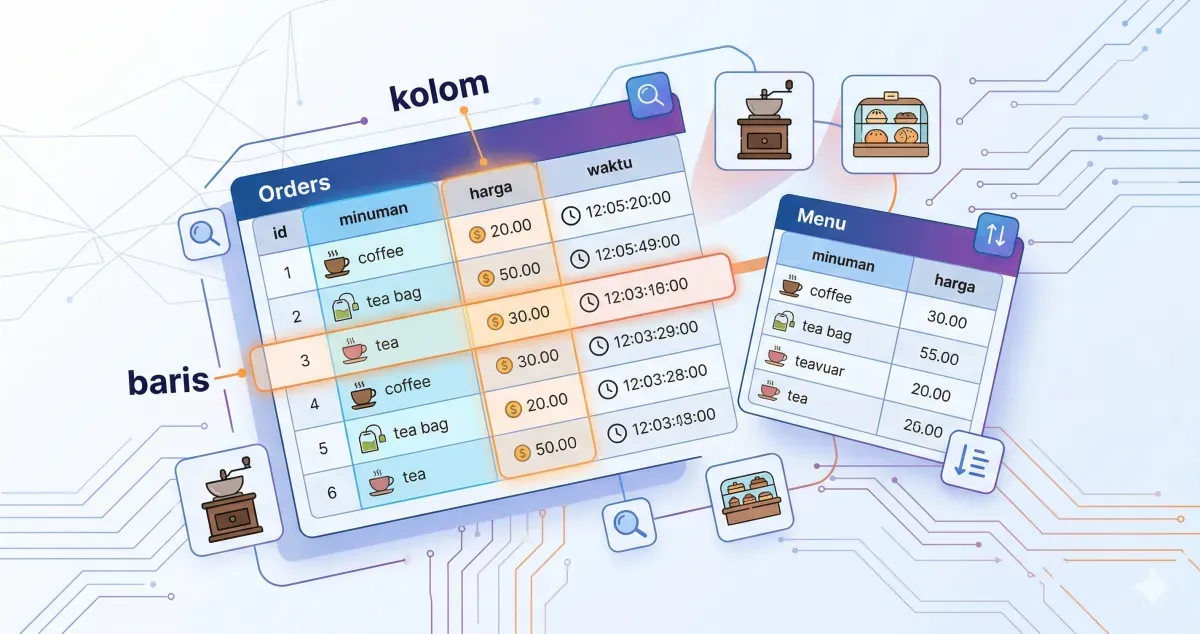
Databases organize information digitally so computers can search, count, and sort data in seconds. Inside a database, data is stored in tables, which resemble spreadsheets. Columns represent the type of information (e.g., drink, price), while rows represent a complete individual record (e.g., a single customer’s order). SQL is the language used to ask the database questions, known as queries, to retrieve specific data without altering it.
Inside databases, what is the term for the “spreadsheets” that store the information?
Table
Task 3: Writing Your First SQL Query#
This task explains the four core components of a basic SQL query:
SELECT: Chooses which columns to display (using*selects all columns).FROM: Specifies which table the data comes from.WHERE: Filters the results to only show rows that match a specific condition.ORDER BY: Sorts the output by a specific column (defaults to lowest-to-highest; addingDESCreverses it to highest-to-lowest). These keywords can be combined to run highly specific searches, like filtering for a specific drink and sorting the results by price.
When you showed all orders, how many rows were returned?
This is the script for the solution: SELECT * FROM Orders;
50
When you sorted orders by price from cheapest to most expensive, which drink appeared first?
This is the script for the solution: SELECT * FROM Orders ORDER BY price;
Tea
When you sorted the menu by price from most expensive to cheapest, which drink appeared first?
This is the script for the solution: SELECT * FROM Orders ORDER BY price DESC;
latte
Task 4: Conclusion#
The room concludes with a review of how databases store information using tables, rows, and columns. It recaps the four foundational SQL commands learned (SELECT, FROM, WHERE, ORDER BY) and how they are used to show, filter, sort, and retrieve data. Finally, it leaves you with a conceptual question about the security implications of allowing unauthorized users to modify or delete data.
I have successfully completed this room and can write basic SQL queries.
No answer needed
Thanks for reading. See you in the next lab.